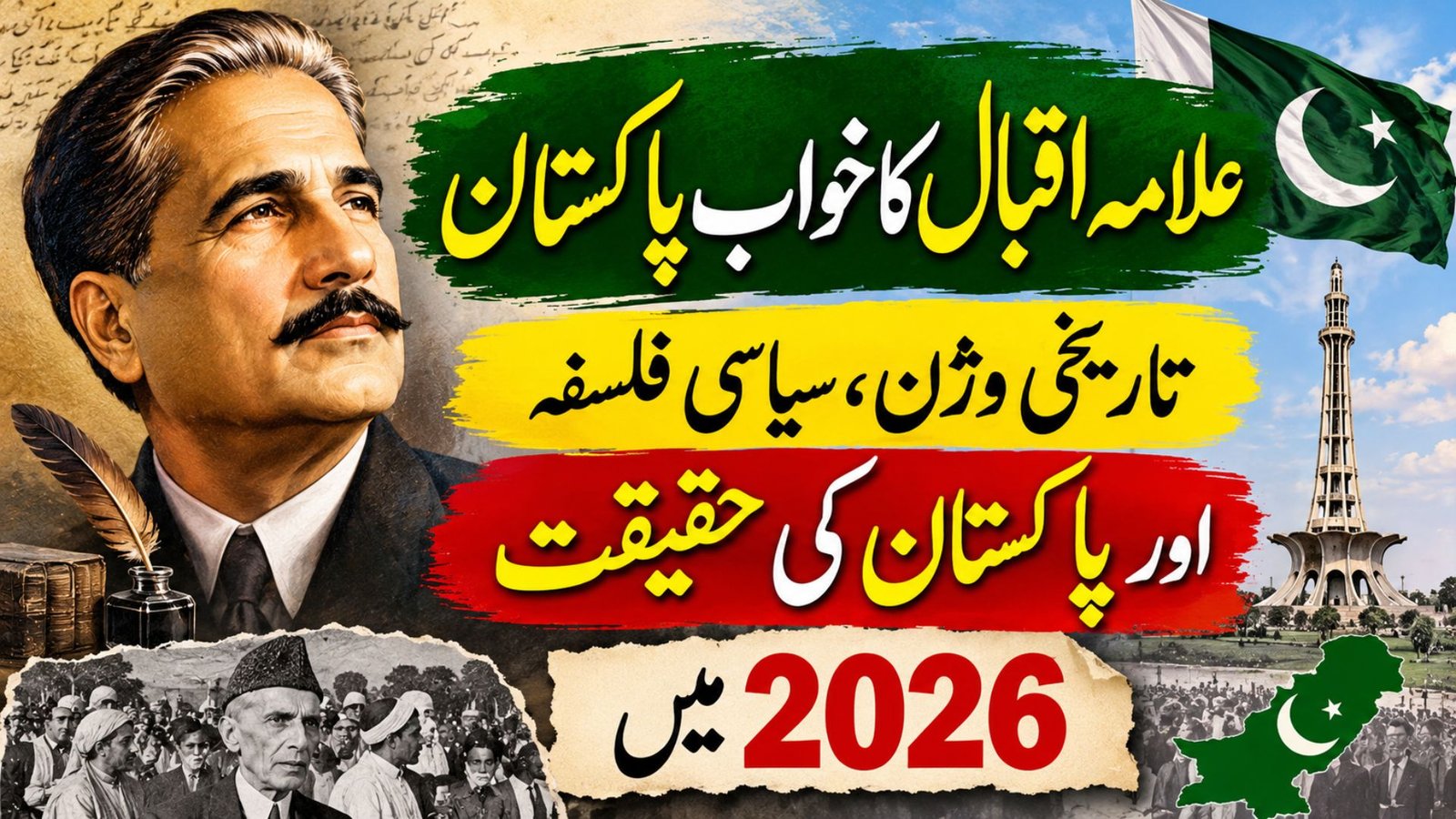
Allama Iqbal’s Dream of Pakistan: Historical Vision, Political Philosophy and Pakistan’s Reality in 2026
Allama Iqbal’s Dream of Pakistan
Allama Muhammad Iqbal is one of the most important intellectual figures in the history of the Indian subcontinent, and his name remains closely connected with the Pakistan Movement, Muslim political identity and the idea of a separate political future for Indian Muslims. His famous Allahabad Address of 1930 is often described as the foundation of Iqbal’s Dream of Pakistan, but historians and researchers continue to discuss what he actually proposed and how his political ideas developed over time. Understanding Iqbal’s Vision of Pakistan requires more than reading one speech because his philosophy included political freedom, economic justice, Muslim unity, human dignity and the development of a society based on Islamic ethical values.
In 2026, this historical discussion remains important because Pakistan is still examining its national identity, political system, economic challenges and founding principles. The debate is not simply about whether Iqbal predicted the creation of Pakistan in 1947; it is also about whether modern Pakistan reflects the values that shaped his political and philosophical thinking. His writings provide an opportunity to understand the relationship between the Pakistan Dream, Islamic Political Thought and the responsibilities of a modern state.
This article explains Allama Iqbal’s political journey, the Allahabad Address 1930, his relationship with Muhammad Ali Jinnah, the Two-Nation Theory and the difference between his original political proposals and the country that emerged in 1947. It also examines Pakistan’s historical development and the questions surrounding Iqbal’s Vision and Modern Pakistan in 2026 and beyond.
Who Was Allama Iqbal? Understanding His Vision and Political Ideas
Allama Muhammad Iqbal was born on 9 November 1877 in Sialkot, which was part of British India at that time. He became a respected poet, philosopher, lawyer and political thinker whose writings influenced Muslims across the subcontinent. He studied in Lahore and later continued his education in Europe, receiving a doctorate from the University of Munich in 1907 and qualifying as a barrister in London in 1908. His education exposed him to different political systems, Western philosophy and Islamic intellectual traditions, which later became important parts of Iqbal’s Philosophy. He died in Lahore on 21 April 1938, almost nine years before Pakistan’s creation.
Iqbal’s importance was not limited to poetry or religious discussions. His work addressed the political, educational, social and economic problems faced by Muslims in British India. He believed that a community could not improve its position through emotional speeches alone; it needed education, confidence, responsible leadership and the ability to make decisions about its own future. This approach explains why Iqbal as a Visionary is remembered in both literary and political history.
His poetry introduced important ideas about self-respect, responsibility and personal development. His concept of Khudi encouraged individuals to understand their abilities, develop their character and take an active role in society. For Iqbal, a strong Muslim Identity was not simply a matter of belonging to a religious community; it also involved knowledge, moral responsibility, social cooperation and the courage to face difficult circumstances.
The connection between Iqbal and Pakistan developed through his political speeches, writings and relationship with Muslim leaders. However, his complete political philosophy was much broader than the idea of establishing a new country. He wanted Muslims to develop a social and political system that protected their identity while giving ordinary people opportunities for education, economic security and personal growth.
What Was Iqbal’s Dream of Pakistan?
The question of What Was Iqbal’s Dream of Pakistan? is more complicated than the popular explanation that he simply imagined the present-day country and announced its creation in 1930. His political ideas developed during a period when Muslims were concerned about constitutional representation, political power, religious identity and their future under British rule.
Iqbal’s Concept of Pakistan was connected with the need for a political arrangement in which Muslims could protect their cultural and religious identity and participate in government with meaningful authority. He believed that the Muslim population of India had a distinct historical experience and social structure that deserved recognition in constitutional planning.
In his political thinking, a Muslim State was not supposed to be a country where only religious identity mattered. It was expected to provide an environment in which Islamic ethical values could influence public life, justice, education and economic relationships. His idea of a Muslim State in India was particularly connected with the political conditions of the north-western Muslim-majority regions.
The phrase Separate Muslim State is often used to describe his vision, although its exact meaning changed across different discussions and years. His 1930 proposal focused on the consolidation and autonomy of Muslim-majority provinces, while his later correspondence with Jinnah discussed a separate federation of Muslim provinces.
This distinction matters because Iqbal’s Political Ideas should be understood through his original speeches and letters rather than through simplified historical statements. His dream involved Muslim Self-Determination, political representation and the freedom to develop a society according to its own social and ethical principles.
Why Did Iqbal Want Political Freedom for Muslims?
During British India, Muslims were concerned about their representation in future constitutional arrangements. They feared that a political system based only on numerical majority could leave Muslim communities with limited influence over decisions affecting their education, economy and religious institutions.
Iqbal believed that political arrangements should recognise the different communities living in India instead of treating the entire population as one culturally identical group. His argument was based on Muslim Nationalism, but it also included the importance of cooperation, equal rights and peaceful relations between communities.
His understanding of political freedom was linked with the right of a community to protect its traditions while developing its social and economic institutions. Therefore, the Pakistan Dream was not simply about changing geographical boundaries; it was also about creating opportunities for collective development.
Iqbal’s Allahabad Address 1930 – The Turning Point in Muslim Political History
The Allahabad Address 1930 is one of the most discussed political speeches in the history of the Pakistan Movement. Allama Iqbal delivered it on 29 December 1930 while presiding over the annual session of the All India Muslim League at Allahabad. The speech explained his concerns about Muslim political representation and the future constitutional structure of India.
In this address, Iqbal proposed bringing Punjab, the North-West Frontier Province, Sindh and Balochistan together into one consolidated Muslim political unit. He discussed self-government within or outside the British Empire and argued that a consolidated North-West Indian Muslim state represented an important political future for Muslims in that region. Allama Iqbal+1
However, the historical meaning of this proposal needs careful explanation. Some accounts interpret the speech as the first clear announcement of Pakistan, while other historians point out that Iqbal was discussing an autonomous Muslim-majority unit within a wider Indian political arrangement in 1930.
The original address itself refers to Muslim India within India and discusses the federal structure of the country. Therefore, the speech should not be presented as an exact blueprint of Pakistan’s present-day borders or constitutional system.
Main Points of the Allahabad Presidential Address
| Important point | Historical explanation |
|---|---|
| Address date | 29 December 1930 |
| Location | Allahabad, British India |
| Occasion | Annual session of the All India Muslim League |
| Main speaker | Allama Muhammad Iqbal |
| Proposed regions | Punjab, NWFP, Sindh and Balochistan |
| Main political demand | Consolidation and autonomy of Muslim-majority areas |
| Central concern | Muslim political representation and self-government |
| Historical importance | A major milestone in Muslim constitutional thought |
The Allahabad Presidential Address also discussed the relationship between religion, politics and nationalism. Iqbal believed that the social identity of Muslims could not be fully understood through territorial boundaries alone. Their shared religious, historical and cultural experiences also influenced their political outlook.
Did Iqbal Actually Propose an Independent Pakistan in 1930?
This is one of the most important questions in the discussion of Iqbal’s Theory of Pakistan. The answer requires a distinction between his original proposal and the later political developments that resulted in Pakistan.
In the 1930 speech, Iqbal proposed the consolidation of north-western Muslim-majority provinces. However, in a letter published in The Times in October 1931, he clarified that he was not demanding a Muslim state outside the British Empire. In 1934, he also wrote to Edward John Thompson that the Pakistan scheme was not his own proposal and described his original plan as a Muslim province within the proposed Indian federation.
This historical evidence shows why it is important to separate Iqbal’s 1930 proposal from the later demand for an independent country. His political thinking continued to develop, and his later correspondence with Jinnah discussed further possibilities for Muslim political organisation.
The debate does not reduce his importance in Pakistan’s history. Instead, it gives a clearer understanding of his changing political views and the intellectual background of the Pakistan Movement.
Iqbal’s Role in the Pakistan Movement Before 1947
Allama Iqbal played an important intellectual and political role in the development of Muslim political awareness before Pakistan came into existence. His speeches encouraged Muslims to think about their constitutional future, while his poetry inspired confidence, unity and social responsibility.
The Pakistan Movement was not the work of one person or one organisation. It developed through several political campaigns, constitutional discussions, public movements and decisions made by different Muslim leaders over many years.
Iqbal’s contribution was mainly connected with political philosophy, public awareness and communication with leading figures. He encouraged Muslims to organise themselves politically and supported the need for strong leadership under Muhammad Ali Jinnah.
Iqbal and Jinnah – Their Political Relationship
The relationship between Iqbal and Jinnah is an important chapter in the history of Muslim political thought. Both leaders wanted Muslims to have a meaningful political future, although they worked in different ways and during different stages of the independence struggle.
Iqbal’s Letters to Jinnah are especially important because they explain his concerns about Muslim poverty, political organisation, constitutional rights and the need for Muslim political leadership.
In his correspondence, Iqbal encouraged Jinnah to strengthen the Muslim League and build a united political platform. He also discussed the possibility of a separate federation of Muslim provinces and argued that Muslims of north-western India and Bengal should be recognised as communities entitled to self-determination.
A letter dated 21 June 1937 is particularly important in discussions about Iqbal’s later political thinking. It reflects his concern that Muslim political rights required more than limited representation in a central government.
Iqbal also believed that political leadership should address the economic difficulties of ordinary people. He warned that Muslim political organisations could not maintain public support if they ignored poverty and the basic needs of the population.
His correspondence therefore connects Iqbal’s Role in Pakistan Movement with both constitutional politics and the everyday problems of Muslim society.
Important Historical Timeline
| Year | Historical event |
|---|---|
| 1877 | Allama Iqbal was born in Sialkot |
| 1905–1908 | Higher education in Europe and legal qualification |
| 1926 | Elected to the Punjab Legislative Council |
| 1930 | Delivered the Allahabad Address |
| 1931 | Participated in the Round Table Conference in London |
| 1932 | Attended another Round Table Conference |
| 1934 | Clarified his position about the Pakistan scheme in correspondence |
| 1937 | Wrote important letters to Muhammad Ali Jinnah |
| 1938 | Died in Lahore |
| 1940 | Lahore Resolution was adopted |
| 1947 | Pakistan became independent on 14 August |
Iqbal did not live to witness Pakistan’s Creation. His death in 1938 came before the Lahore Resolution of 1940 and the independence of Pakistan in 1947. Nevertheless, his political writings remained part of the intellectual background of the movement.
Two-Nation Theory and the Ideology of Pakistan
The Two-Nation Theory became an important part of the political argument for Muslim self-determination in British India. It was based on the understanding that Muslims and Hindus had different religious traditions, social customs, historical experiences and cultural identities. Supporters argued that these differences needed constitutional recognition when deciding the future political structure of India.
Iqbal’s political philosophy contributed to this discussion because he believed that Islam had influenced the social organisation and collective identity of Indian Muslims. His argument was not limited to religious practices; he also discussed the role of Islamic principles in law, education, community relations and public administration.
The Ideology of Pakistan later developed through the contributions of several political leaders and intellectuals. Muhammad Ali Jinnah, the Muslim League, other political representatives and Muslim communities all played important roles in shaping the demand for a separate homeland.
How Did Muslim Political Identity Develop?
During British India, the All India Muslim League became an important organisation representing Muslim political interests. Its activities included constitutional negotiations, discussions about separate electorates and demands for political safeguards.
The Muslim Community in India was not a completely uniform group. Muslims belonged to different regions, languages, economic classes and cultural traditions. However, many political leaders believed that a common political platform was necessary to protect their collective interests.
The history of Muslim Nationalism also developed through discussions about Indian Nationalism, minority rights and the future of representative government. These discussions influenced the political demands that eventually became part of the Pakistan Movement.
Iqbal’s Understanding of Islamic Political Thought
Iqbal believed that religion could influence public life through moral principles, social responsibility and justice. His Islamic Political Thought connected individual character with collective development, and he argued that political institutions should help people achieve a better standard of life.
His concept of an Islamic State was not simply about using religious language in government. It involved a system in which justice, equality, consultation and the protection of human dignity could guide public decisions.
The Islamic Social System in his thinking was connected with cooperation, economic responsibility and the welfare of society. He also discussed Islamic Philosophy as a way of understanding human existence, personal responsibility and the relationship between individuals and the wider community.
For this reason, Iqbal’s political ideas cannot be separated from his understanding of Muslim Unity and the historical development of Islamic civilisation.
Iqbal’s Political Philosophy – Khudi, Freedom and Human Development
Iqbal’s Political Philosophy was closely connected with his understanding of human nature, spiritual development and social responsibility. He did not believe that a country could become successful only through political independence or the presence of powerful institutions. A society also needed educated citizens, ethical leadership and opportunities for ordinary people.
His philosophy linked individual improvement with collective progress. He believed that people should develop their abilities instead of depending entirely on others to decide their future. This idea became an important part of his Philosophy of Self.
What Is Khudi in Iqbal’s Philosophy?
Khudi is one of the central ideas in Iqbal’s poetry and philosophy. It is commonly understood as selfhood, self-respect or the development of the individual personality. However, its meaning is deeper than simple confidence or personal pride.
Iqbal’s Concept of Khudi encouraged individuals to strengthen their character, develop knowledge, take responsibility and work towards meaningful goals. He believed that a person with a strong sense of self could contribute positively to society and face difficulties with determination.
His Philosophy of Khudi also connected personal freedom with moral responsibility. According to this approach, freedom should not mean doing anything without considering the rights of other people. It should help individuals use their abilities in a responsible and constructive way.
Iqbal’s Concept of Freedom and Human Destiny
Iqbal’s Concept of Freedom was connected with the ability of individuals and communities to develop their potential without unjust restrictions. He believed that human beings had a meaningful purpose and that education, knowledge and ethical action could help them move towards that purpose.
His Concept of Human Destiny was based on continuous growth, action and spiritual development. He did not encourage people to accept poverty, weakness or social injustice as permanent conditions. Instead, he wanted them to work towards improvement.
This understanding of freedom was also relevant to Muslim Self-Determination because he believed that communities needed political and social opportunities to develop their institutions.
Iqbal’s Concept of Equality and Justice
Iqbal’s Concept of Equality was not limited to giving everyone the same political status. It also involved recognising human dignity and ensuring that economic and social arrangements did not permanently benefit only powerful groups.
His Concept of Justice focused on fair treatment, protection of rights and the responsibilities of people in positions of authority. He was concerned about the gap between wealthy and poor sections of society and believed that political institutions should address the needs of ordinary people.
These ideas were connected with Islamic Ethical Values, which included honesty, fairness, compassion and responsibility towards others.
Iqbal’s Concept of Democracy
Iqbal’s Concept of Democracy should be understood through his writings rather than through modern political labels. He supported consultation and public participation but criticised political arrangements that ignored the social and cultural realities of different communities.
His idea of Iqbal’s Islamic Democracy was connected with equality, justice and moral responsibility. He believed that democracy should protect people from unfair control and should not become a system in which a powerful majority could permanently dominate weaker groups.
His political philosophy also included discussions about Iqbal’s Social Philosophy and Iqbal’s Economic Philosophy, because he understood that political freedom could not produce meaningful progress without social and economic improvements.
Tawhid, Human Dignity and Spiritual Development
Tawhid, the belief in the oneness of God, was central to Iqbal’s understanding of life and society. He connected this principle with the idea that human beings share a common moral responsibility and should not create unjust divisions based on wealth, status or power.
His philosophical writings discussed Human Dignity, Self-Discovery and Spiritual Development as important parts of human progress. These ideas were also connected with Freedom and Self-Determination because individuals needed opportunities to develop their abilities and contribute to society.
The phrase Equality Solidarity and Freedom is particularly relevant to this discussion. In Iqbal’s philosophical framework, these principles were not separate political slogans; they were connected with the moral purpose of social organisation.
Reconstruction of Religious Thought in Islam
One of Iqbal’s most important intellectual works was The Reconstruction of Religious Thought in Islam. It developed his views about religion, modern knowledge, philosophy, science and the responsibilities of Muslims in a changing world.
The book explained that Islamic thought should not remain disconnected from contemporary problems. Iqbal wanted Muslims to understand their religious traditions while also engaging with modern intellectual and social developments.
His approach to Iqbal’s Metaphysics explored questions about God, human existence, knowledge and reality. These discussions helped explain why his political philosophy was connected with a wider understanding of human life rather than only the formation of a Muslim-majority political unit.
Historical Development: From British India to Pakistan’s Creation in 1947
The Pakistan Movement developed over several decades, and its history cannot be explained through the Allahabad Address alone. Different political organisations, constitutional proposals and public movements contributed to the demand for a separate homeland.
Before independence, Muslims faced questions about representation, provincial autonomy and the balance of political power in a future constitutional system. The Round Table Conferences in London during 1930–1932 were part of the wider effort to discuss constitutional reforms in British India.
Iqbal participated in these discussions and continued to explain why Muslim political interests needed proper recognition. His political ideas were part of a larger debate involving the British government, Congress leaders, Muslim League representatives and other political groups.
From Allahabad to the Lahore Resolution
The Lahore Resolution was adopted by the All India Muslim League on 23 March 1940. It became a major milestone in the political history of the Pakistan Movement because it demanded independent political arrangements for Muslim-majority areas in the north-western and eastern zones of British India.
The resolution came twelve years after Iqbal’s Allahabad Address. It was not simply a copy of his 1930 proposal; it represented a later political development shaped by changing circumstances and the work of Muslim political leaders.
The historical relationship between Iqbal and Jinnah is important here because Iqbal’s letters and political thinking helped explain the need for a stronger Muslim political organisation.
Partition of India and the Creation of Pakistan
The final years of British rule brought major political changes. Negotiations over constitutional arrangements, political disagreements and demands for separate political authority eventually led to the Partition of India in 1947.
Pakistan became independent on 14 August 1947, while India became independent on 15 August 1947. The new country was divided into two geographically separate wings: West Pakistan and East Pakistan.
The creation of Pakistan in 1947 was a major historical event, but it also brought serious challenges involving administration, migration, economic resources, security and institution-building.
The history of Indian Muslim History therefore includes several different stages: political reform under British India, the development of Muslim political organisations, constitutional negotiations, the Pakistan Resolution 1940 and the final independence movement.
Pakistan Dream vs Reality – Is This the Pakistan Iqbal Dreamt Of?
The debate about Pakistan Dream or Nightmare is based on a comparison between Iqbal’s philosophical ideals and the challenges faced by modern Pakistan. Some writers emphasise that Pakistan fulfilled an important political demand of Muslims in the subcontinent, while others question whether the country has achieved the social and economic principles that Iqbal considered essential.
The question Is This the Pakistan Iqbal Dreamt Of? cannot be answered only by looking at the country’s name, national symbols or religious identity. It requires examining education, justice, economic opportunities, public services, political participation and the condition of ordinary citizens.
Pakistan’s Current Reality in 2026
Pakistan’s population, economy and social structure have changed significantly since independence. According to the Pakistan Bureau of Statistics, the 2023 digital census recorded a population of 241,499,431, compared with 207,684,626 in the 2017 census. This represents an increase of approximately 16.3% over six years. pbos.gov.pk+1
The population figures show the scale of responsibility facing the country. A growing population requires better educational institutions, healthcare facilities, employment opportunities, infrastructure and fair distribution of resources.
Pakistan’s Political System also faces the continuing challenge of building stable institutions that can protect constitutional rights and provide accountability. Political disagreements are a normal part of public life, but effective institutions are important for ensuring that government decisions serve the wider population.
Pakistan’s Social System must also address educational differences, unequal opportunities and access to basic services. These issues are closely connected with the values of equality and social responsibility found in Iqbal’s writings.
The Pakistan’s Economic System is another important part of this discussion. Economic growth needs to create opportunities for ordinary households, support employment and improve living standards rather than concentrating benefits among a limited section of society.
Pakistan’s Ideological Foundation and National Identity
Pakistan’s Ideological Foundation is frequently discussed through the writings of Iqbal and the political speeches of Jinnah. However, the interpretation of these ideas has not always been identical among historians, political leaders and scholars.
Pakistan’s National Identity developed through the experience of independence, constitutional debates, cultural diversity and the country’s religious and historical background.
The challenge is to understand the founding principles in a way that recognises the rights of all citizens. Political freedom should be supported by justice, equality, protection of minorities and opportunities for people from different economic backgrounds.
Pakistan’s Colonial Legacy
Pakistan inherited many administrative, legal and institutional structures from British India. This historical background is often discussed under the term Colonialism in Pakistan, particularly when examining the relationship between state institutions and ordinary citizens.
The country’s political and administrative systems have changed since 1947, but discussions about accountability, public participation and institutional reform remain important.
Iqbal’s Vision and Modern Pakistan can therefore be examined through a practical question: do public institutions help citizens develop their abilities and live with dignity, or do social and economic barriers prevent them from reaching their potential?
Social Justice, Economic Justice and the Rights of Ordinary People
Social Justice in Pakistan remains an important subject because citizens do not always have equal access to quality education, healthcare, employment and legal protection.
Economic Justice is equally important. A country’s progress should not be measured only through national income or major development projects; it should also be considered through household income, job opportunities, public services and the living conditions of ordinary people.
Iqbal’s writings frequently highlighted Muslim Poverty and the economic difficulties of less privileged communities. His letters to Jinnah showed concern about the Rights of Muslim Masses and the responsibility of political organisations to improve their conditions.
The relationship between Elite and Masses is another important subject in modern discussions of his political philosophy. A state that allows a small group to control most economic and political opportunities cannot easily achieve the wider principles of equality and justice.
The idea of an Islamic Welfare State is relevant to this discussion because it focuses on public responsibility, protection of vulnerable people and fair access to essential services. It should be evaluated through actual policies and outcomes rather than simply through official descriptions.
Iqbal’s Views on Hindu-Muslim Relations and Indian Nationalism
Iqbal’s political thinking about Hindu-Muslim relations developed during a period of constitutional uncertainty and growing political competition in British India. He recognised that Hindus and Muslims had different religious traditions and social identities, but his writings also show that he did not consider all efforts towards cooperation between the communities impossible.
His Views on Hindu Muslim Relations should therefore be studied through his speeches, letters and changing political positions rather than through a single statement.
In his 1930 address, Iqbal argued that Indian constitutional arrangements needed to recognise the country’s different communities. He believed that a political system based only on a simple majority could create difficulties for communities that had different cultural and religious identities.
Iqbal’s Views on Indian Nationalism
Iqbal’s Views on Indian Nationalism were connected with his belief that India was a diverse society rather than a single culturally uniform nation. He questioned whether European models of territorial nationalism and majority-based democracy could be applied to India without considering its different communities.
His criticism was not simply a rejection of peaceful cooperation. He wanted political arrangements that allowed communities to develop freely without losing their individual identities.
Iqbal’s Views on Muslim Nationalism
Iqbal’s Views on Muslim Nationalism focused on the shared religious, historical and cultural experiences of Muslims. He believed that these connections influenced their social identity and political interests.
However, his wider philosophy also placed importance on human dignity, moral responsibility and the development of society. His political thinking cannot be reduced to geographical separation alone.
Iqbal’s Vision of Muslim Unity
Muslim unity was another important part of his intellectual work. Iqbal wanted Muslims to move beyond political divisions, educational weakness and economic difficulties. He encouraged them to develop knowledge, confidence and a shared sense of responsibility.
His idea of unity was not simply about supporting a political organisation. It was also about building a society in which people could cooperate, improve their economic conditions and protect the rights of others.
Iqbal’s Changing Political Views and His Letters to Jinnah
A proper understanding of Iqbal’s Political Evolution requires studying the period between his early political activities, the Allahabad Address and his later correspondence with Jinnah.
In 1930, he discussed an autonomous political arrangement for Muslim-majority provinces in north-western India. In 1931, he clarified aspects of his position in a letter published in The Times. In 1934, he distinguished his proposal from the separate federation scheme that was being discussed by other political figures.
By 1937, his letters to Jinnah showed a stronger concern for a separate federation of Muslim provinces and the political and economic future of Muslims.
These developments explain why the statement that Iqbal always supported exactly the same political arrangement is historically incomplete. His ideas developed in response to changing constitutional discussions and the difficulties faced by Muslims.
Why Did Iqbal Focus on Muslim Poverty?
Iqbal believed that political independence or constitutional representation would have limited value if ordinary people continued to face poverty and economic insecurity.
In his correspondence with Jinnah, he raised the question of how Muslim political organisations could improve the living conditions of the wider population. He discussed the need for an economic system that could protect people’s basic rights and provide a fairer social structure.
This part of his political thinking is particularly important because it connects the Pakistan Movement with questions about employment, income, education and public welfare.
Was Pakistan Iqbal’s Original Idea?
The question Was Pakistan Iqbal’s Original Idea? has been discussed by historians and researchers for many years. The answer depends on what is meant by the word Pakistan and which stage of Iqbal’s political thinking is being discussed.
The idea of creating a separate Muslim political unit existed in different forms before and after the Allahabad Address. Iqbal’s 1930 proposal was important because it gave a clear political direction to the demand for autonomy in Muslim-majority north-western regions.
However, he later clarified that his original 1930 plan was not identical to the Pakistan scheme involving a separate federation of Muslim provinces. His 1937 correspondence with Jinnah reflected further developments in his political thinking.
It is therefore more accurate to describe Iqbal as an important intellectual figure whose ideas influenced Muslim political thought and the development of the Pakistan Movement, rather than claiming that he personally designed every feature of the country established in 1947.
What Did Iqbal Mean by Muslim State?
When examining What Did Iqbal Mean by Muslim State, readers should consider the historical meaning of political terms used in British India.
In his Allahabad Address, he discussed the consolidation of Muslim-majority regions and their political autonomy. He also explained that these regions could develop within a wider Indian constitutional arrangement.
His later letters discussed a separate federation of Muslim provinces. These documents show that the meaning of Muslim statehood in his writings needs to be understood according to the date and political context of each document.
Iqbal’s Vision of a Muslim State and the Future
Iqbal’s Vision of a Muslim State included more than political control over a particular territory. It was connected with education, economic justice, social responsibility and the ability of Muslims to organise their collective affairs.
His vision was also linked with the wider question of how Islamic principles could contribute to a modern political and social system. This is why his writings remain relevant to discussions about Pakistan’s Founding Ideology and the responsibilities of a state towards its citizens.
What Should Pakistan Learn from Iqbal’s Vision in 2026 and 2027?
The discussion of Iqbal’s Dream vs Reality should not remain limited to historical arguments. It can also help readers understand the responsibilities that come with independence and the challenges facing a modern country.
In 2026, Pakistan needs to address several long-term issues, including education, economic opportunities, institutional accountability, social equality and the development of human resources. These are practical areas in which Iqbal’s philosophical ideas can be discussed.
For 2027, the same principles can provide a useful framework for evaluating future national progress. However, future population, economic growth or government programme figures should not be treated as confirmed facts until the relevant official data is published.
The following areas explain how Iqbal’s ideas can be connected with Pakistan’s future:
1. Education and knowledge: Iqbal believed that knowledge was essential for personal and collective development. Better educational opportunities can help young people participate in the economy and contribute to national progress.
2. Economic opportunities: His concern about poverty shows why employment, fair wages and access to economic resources should remain important national priorities.
3. Equal rights: A fair society requires legal protection and equal opportunities for citizens, regardless of their financial or social background.
4. Responsible leadership: Iqbal’s political writings emphasised the importance of leadership that understands public problems and works for the welfare of the community.
5. Institutional improvement: Strong institutions, accountability and public participation are important for turning national principles into practical results.
6. Social cooperation: Pakistan’s diverse population needs an environment in which people can work together while respecting different communities, languages and cultural traditions.
The Reality of Iqbal’s Pakistan Dream should therefore be examined through measurable improvements in people’s lives rather than through political slogans alone.
Important Historical Facts and Figures About Iqbal and Pakistan
The following table brings together important dates, historical developments and official population figures to help readers understand the difference between Iqbal’s lifetime and Pakistan’s development after independence.
| Topic | Verified historical information |
|---|---|
| Iqbal’s birth | 9 November 1877 |
| Birthplace | Sialkot, British India |
| European doctorate | 1907, University of Munich |
| Legal qualification | Lincoln’s Inn, 1908 |
| Punjab Legislative Council | Elected in 1926 |
| Allahabad Address | 29 December 1930 |
| Round Table Conferences | 1931 and 1932 |
| Letter clarifying the Pakistan scheme | 1934 |
| Important letters to Jinnah | 1937 |
| Iqbal’s death | 21 April 1938 |
| Lahore Resolution | 23 March 1940 |
| Independence of Pakistan | 14 August 1947 |
| Pakistan’s population in 2017 | 207,684,626 |
| Pakistan’s population in 2023 | 241,499,431 |
| Population increase, 2017–2023 | Approximately 16.3% |
Historical dates are based on Iqbal’s biographical records and historical accounts. Population figures are from the Pakistan Bureau of Statistics Census 2023.
Pakistan’s Population: 2017 vs 2023
Pakistan’s population growth
Official census figures, in millions.
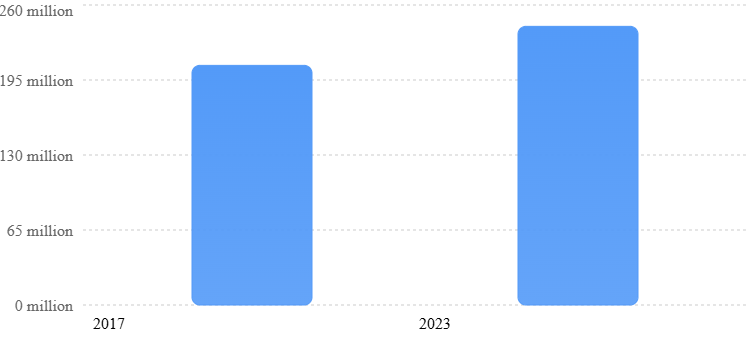
The figures show that Pakistan’s population increased by around 33.8 million between the two census years. This growth highlights the need for better planning in education, healthcare, housing, employment and public services. These are important considerations when comparing the social and economic responsibilities of modern Pakistan with Iqbal’s ideas about human development.
Important Note: Historical Facts About Iqbal’s Dream of Pakistan
Readers should remember a few important historical points when studying this subject:
- Iqbal delivered his Allahabad Address on 29 December 1930.
- His original proposal focused on the consolidation of north-western Muslim-majority provinces.
- The 1930 proposal should not automatically be treated as an exact description of the independent Pakistan created in 1947.
- Iqbal’s later letters to Jinnah provide additional information about his political thinking.
- Iqbal died in 1938 and did not witness the Lahore Resolution or Pakistan’s independence.
- The Pakistan Movement involved several leaders, organisations and political developments.
- Pakistan’s 2023 census remains the latest official census dataset used for the population comparison in this article; it should not be presented as a new 2026 or 2027 census.
Most importantly: Iqbal’s political vision should be understood through his original writings, historical context and philosophical ideas. Describing him only as the person who announced the exact formation of Pakistan in 1930 leaves out important details of his intellectual and political journey.
Frequently Asked Questions About Allama Iqbal’s Dream of Pakistan
1. What was Allama Iqbal’s Dream of Pakistan?
Iqbal wanted Muslims in British India to have political freedom, meaningful representation and opportunities to develop their religious, social and economic institutions. His 1930 proposal focused on autonomous Muslim-majority regions in north-western India.
2. Did Allama Iqbal propose Pakistan in 1930?
Iqbal proposed consolidating Punjab, Sindh, the North-West Frontier Province and Balochistan into a Muslim political unit. However, his original proposal was not identical to the independent country established in 1947.
3. What was the importance of the Allahabad Address?
The Allahabad Address of 29 December 1930 was an important milestone in Muslim political history. It presented Iqbal’s ideas about Muslim-majority provinces, autonomy and constitutional arrangements in India.
4. What was Iqbal’s relationship with Muhammad Ali Jinnah?
Iqbal communicated with Jinnah through important letters and encouraged him to strengthen the Muslim League. Their correspondence discussed Muslim political representation, economic problems and the future of Muslim-majority provinces.
5. What is Khudi in Allama Iqbal’s philosophy?
Khudi means selfhood and the development of an individual’s personality. Iqbal encouraged people to build confidence, gain knowledge, develop strong character and take responsibility for their future.
6. What was Iqbal’s role in the Pakistan Movement?
Iqbal contributed through his political speeches, philosophical writings and communication with Muslim leaders. His ideas helped shape discussions about Muslim identity, political autonomy and self-determination.
7. Did Allama Iqbal see the creation of Pakistan?
No. Allama Iqbal died on 21 April 1938, while Pakistan became independent on 14 August 1947. He did not witness the creation of the country.
8. What was the difference between Iqbal’s 1930 proposal and the Lahore Resolution?
Iqbal’s 1930 address discussed the consolidation of Muslim-majority north-western provinces. The Lahore Resolution of 1940 represented a later political development that called for independent political arrangements in Muslim-majority areas of British India.
9. Is modern Pakistan following Iqbal’s vision?
This remains a subject of historical and political discussion. Iqbal’s writings emphasised education, justice, economic improvement, human dignity and responsible leadership. These principles can be used to examine the achievements and challenges of modern Pakistan.
10. Why is Iqbal important in Pakistan’s history in 2026?
Iqbal remains important because his poetry, philosophy and political ideas are closely connected with the intellectual history of the Pakistan Movement. His writings also provide a framework for discussing education, national identity, economic justice and social development.
Conclusion – Understanding Iqbal’s Dream Beyond History
Allama Iqbal’s contribution to the history of Pakistan cannot be explained through one speech or one political demand. He was a poet, philosopher and political thinker whose ideas developed through years of study, writing and engagement with the problems of Muslims in British India. His Allahabad Address of 1930 became an important milestone, while his later letters to Muhammad Ali Jinnah provided further insight into his political thinking.
The relationship between Iqbal and Pakistan is therefore both historical and intellectual. Although he did not witness the creation of Pakistan, his writings influenced the political discussion that developed before independence. His ideas about Khudi, freedom, equality, justice and human development also remain important subjects of discussion.
In 2026 and the coming years, understanding Iqbal’s Vision of Pakistan requires looking beyond historical celebrations and examining how the country’s institutions serve its people. Education, economic opportunities, responsible leadership and equal rights remain important measures of national development.
Ultimately, the real value of Iqbal’s Dream of Pakistan lies not only in remembering the past but also in understanding the principles that can help build a fair, educated and responsible society.
Official and Trusted Sources – Historical Facts Verification
| Source | Verified information used | Official/source link |
|---|---|---|
| Iqbal Academy Pakistan | Iqbal’s biography, education, political life and historical contribution | Allama Iqbal Official Website |
| International Iqbal Society | Original Allahabad Presidential Address 1930 | 1930 Presidential Address |
| Pakistan Bureau of Statistics | Population Census 2017 and 2023 | PBS Census Data |
| Dawn News | Historical debate about Iqbal’s 1930 proposal and his letters | Dawn – Iqbal and the Pakistani Dream |
| The Nation | Iqbal’s philosophy, political vision and Pakistan Movement | Understanding Iqbal’s Dream |
| Saad Yacoob | Analysis of Iqbal’s political, economic and social philosophy | Pakistan: Iqbal’s Dream or Nightmare? |