State Bank SME Loan Scheme 2026 – Apply Online Through SMEConnect Portal Pakistan
State Bank SME Loan Scheme 2026
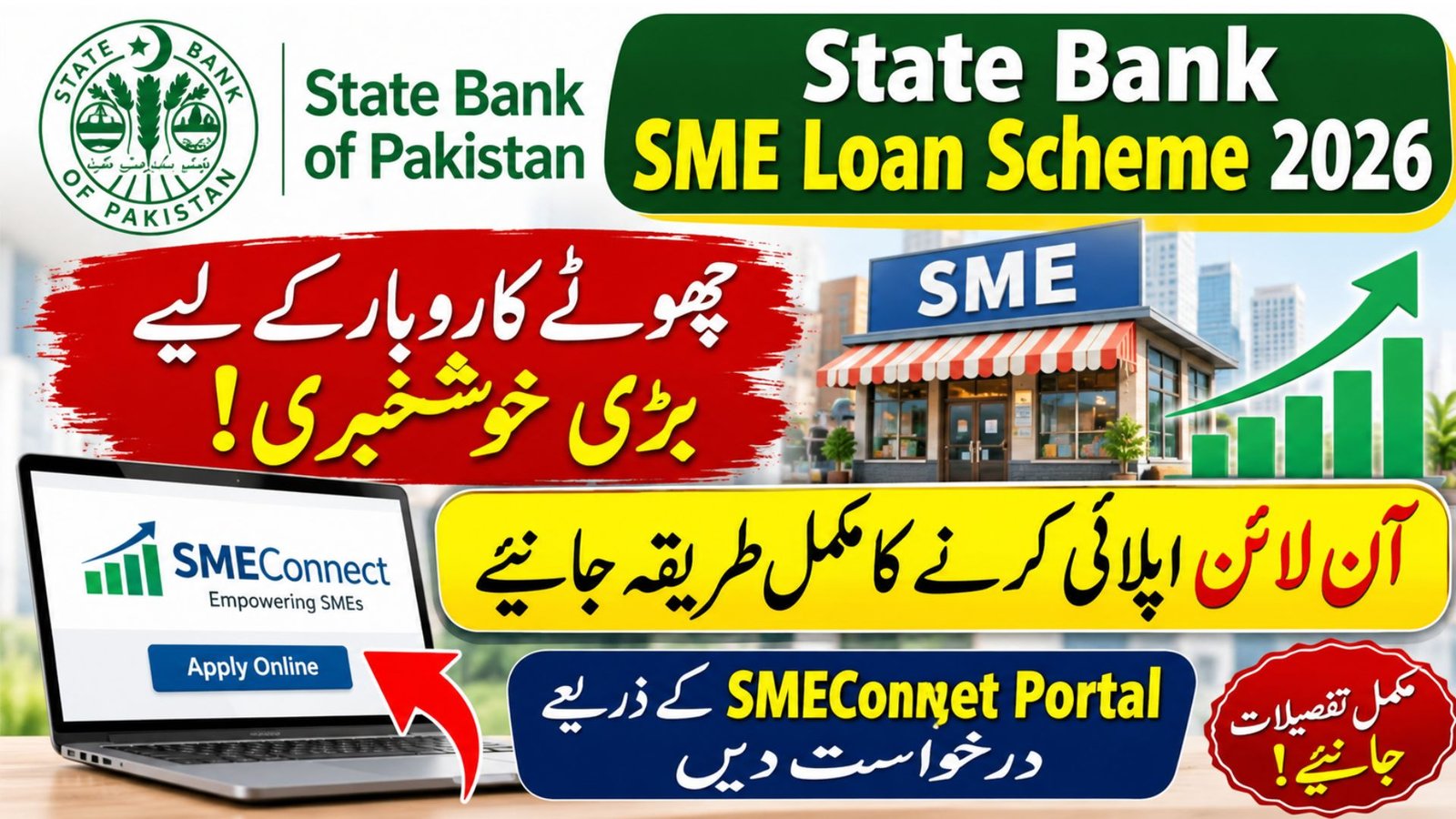
The State Bank SME Loan Scheme 2026 is an important development for small and medium-sized businesses in Pakistan because the State Bank of Pakistan (SBP) has introduced a centralized digital platform to make business financing easier to access. Through the new SMEConnect portal, business owners can submit financing applications online and connect with banks and Development Finance Institutions (DFIs) without having to follow separate digital application processes at different banks.
The State Bank announced the launch of SMEConnect through SH&SFD Circular No. 08 of 2026, dated October 29, 2026. Under these instructions, all SME financing applications must be submitted through the centralized portal from November 1, 2026. Banks and DFIs have also been directed to guide applicants who visit their branches and help them complete the digital application process.
This development is especially important for shop owners, manufacturers, service providers, traders, exporters and other entrepreneurs who need money to purchase stock, buy machinery, manage working capital or expand their businesses. However, applicants should understand that SMEConnect is a financing application platform, not a guarantee that every applicant will receive a loan or a fixed amount of government assistance.
More Read: CM Punjab Laptop Scheme 2026
What Is the State Bank SME Loan Scheme 2026?
The State Bank SME Loan Scheme 2026 is a commonly used search term for the SME financing framework regulated by the State Bank of Pakistan. It covers the rules and banking facilities through which eligible small and medium-sized enterprises can obtain financing from participating financial institutions.
In 2026, the most important new development is the launch of SMEConnect, which provides a centralized digital route for submitting SME financing applications. The platform connects businesses with banks and DFIs and aims to improve communication between applicants and financial institutions.
Previously, business owners generally approached individual banks, completed their application forms and followed the application process provided by their selected institution. The revised process brings SME financing applications onto one centralized digital platform.
The SBP also revised its Prudential Regulations for Small and Medium Enterprise Financing in November 2025, with the revised regulations becoming applicable from January 1, 2026. Therefore, the current SME financing system combines the updated regulatory framework with the new digital application facility.
Latest SME Loan Scheme 2026 Updates in Pakistan
The following table explains the important developments that business owners should know before applying for financing.
| Important Detail | Verified Information |
|---|---|
| Regulating Authority | State Bank of Pakistan |
| New Digital Platform | SMEConnect |
| Official Portal | smeconnect.sbp.org.pk |
| Circular Number | SH&SFD Circular No. 08 of 2026 |
| Circular Announcement | October 29, 2026 |
| Application System | Centralized digital applications |
| Implementation Date | November 1, 2026 |
| Financial Institutions | Banks and DFIs |
| Application Assistance | Bank and DFI branch staff |
| Financing Purpose | Eligible business requirements |
| Loan Approval | Subject to bank assessment |
| Government Guarantee | Not automatically available to every applicant |
| Latest SME Regulations | Applicable from January 1, 2026 |
The government also reviewed SME lending on November 5, 2026, in a meeting chaired by Finance Minister Muhammad Aurangzeb. According to ProPakistani’s report, the meeting discussed expanding commercial bank, microfinance bank and non-bank financial institution lending, particularly for smaller businesses and export-related activities. Officials also discussed improving SMEConnect procedures and strengthening coordination with SMEDA.
These steps show that the focus is not only on creating an online application facility but also on improving the wider SME financing system.
What Is SMEConnect SBP Portal?
The SMEConnect SBP portal is a centralized online platform launched by the State Bank of Pakistan to connect small and medium-sized businesses with banks and DFIs.
Its main purpose is to provide a single digital entry point for businesses looking for financing. Instead of visiting different banking websites to locate separate application facilities, eligible businesses can use the SMEConnect portal to submit their financing requests.
The portal is particularly useful for business owners who may not be familiar with banking procedures or who find it difficult to understand which financial institution offers suitable financing.
The official portal is:
Applicants should always use this official website rather than unofficial registration links or websites claiming to provide guaranteed government loans.
Main Purpose of the SME Connect Portal
The platform has been introduced to support several important objectives:
- Provide a centralized route for SME financing applications.
- Connect businesses with banks and Development Finance Institutions.
- Make the application process more accessible through digital submission.
- Help banks and DFIs receive applications through a common platform.
- Allow branch staff to guide applicants who need assistance.
- Support wider access to formal business financing.
- Improve the overall SME financing ecosystem in Pakistan.
SME Loan Online Apply 2026 – How to Apply Through SMEConnect
Business owners searching for SME Loan Online Apply or SME Loan Apply Online can use the official SMEConnect portal to begin the financing application process.
From November 1, 2026, all SME finance applications are required to be submitted through SMEConnect under the SBP’s new instructions. Applicants who visit a bank or DFI branch for financing must also be guided towards digital submission through this portal.
Step-by-Step SME Loan Application Process
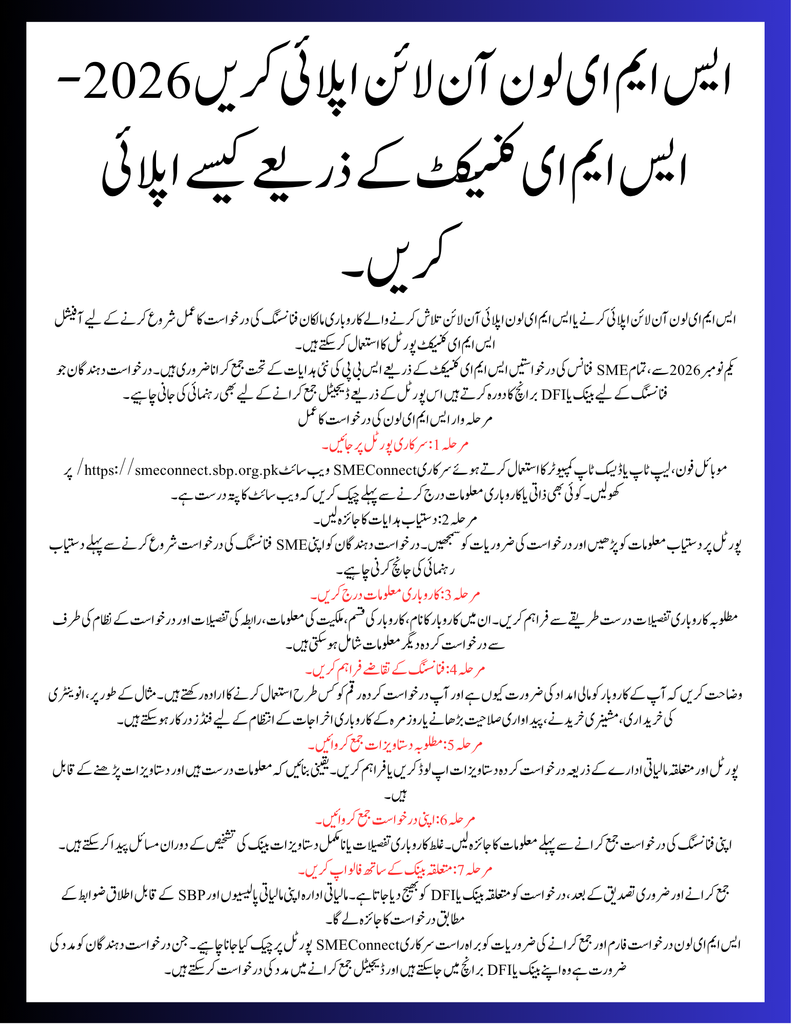
Step 1: Visit the Official Portal
Open the official SMEConnect website at https://smeconnect.sbp.org.pk/ using a mobile phone, laptop or desktop computer. Check that the website address is correct before entering any personal or business information.
Step 2: Review the Available Instructions
Read the information available on the portal and understand the application requirements. Applicants should check the available guidance before starting their SME financing request.
Step 3: Enter Business Information
Provide the required business details accurately. These may include the business name, type of business, ownership information, contact details and other information requested by the application system.
Step 4: Provide Financing Requirements
Explain why your business needs financing and how you intend to use the requested amount. For example, the funds may be required for purchasing inventory, buying machinery, increasing production capacity or managing daily business expenses.
Step 5: Submit the Required Documents
Upload or provide the documents requested by the portal and the relevant financial institution. Make sure the information is accurate and that the documents are readable.
Step 6: Submit Your Application
Review the information before submitting your financing request. Incorrect business details or incomplete documents may create problems during the bank’s assessment.
Step 7: Follow Up With the Relevant Bank
After submission and necessary verification, the application is forwarded to the relevant bank or DFI. The financial institution will review the request according to its financing policies and applicable SBP regulations.
The SME Loan Application Form and submission requirements should be checked directly on the official SMEConnect portal. Applicants who need help can visit their bank or DFI branch and request assistance with digital submission.
Who Can Apply for SME Financing in Pakistan?
SME financing is intended for eligible small and medium-sized businesses operating in Pakistan. The financing system supports different types of business activities, including manufacturing, trading, services and export-related operations.
People searching for SME Loan Eligibility Criteria should understand that the bank evaluates more than just the applicant’s CNIC or business registration. It may also review the business’s financial position, repayment ability, credit history, business purpose and supporting documents.
Potential applicants may include:
- Small business owners and shopkeepers.
- Manufacturing businesses.
- Trading and wholesale businesses.
- Service providers.
- Registered partnerships and companies.
- Sole proprietors and self-employed business owners.
- Eligible exporters and export-related businesses.
- New businesses and qualifying startups.
SME Financing Eligibility Pakistan
The SME financing eligibility requirements depend on the relevant SBP regulations and the policies of the financial institution processing the application.
Banks may assess the following information:
- Valid CNIC of the owner, partners or directors.
- Business ownership and operating details.
- Nature and location of the business.
- Annual sales and financial records.
- Bank statements, where required.
- Business experience and repayment capacity.
- Purpose of the requested financing.
- Existing loans and credit history.
- Financial statements or other supporting documents.
- Security or collateral, where required.
Meeting the basic requirements does not guarantee financing approval. Each bank or DFI makes its decision after reviewing the applicant’s financial information and business circumstances.
Small Enterprise and Medium Enterprise Difference
The State Bank uses separate categories for small and medium-sized businesses. Under the established SME classification, annual sales turnover is an important factor.
| Business Category | Annual Sales Turnover |
|---|---|
| Small Enterprise (SE) | Up to Rs. 150 million |
| Medium Enterprise (ME) | Above Rs. 150 million to Rs. 800 million |
These figures are based on the SBP’s SME classification framework. Applicants should consult the latest applicable Prudential Regulations when determining their business category.
A Small Enterprise and Medium Enterprise may have different financing requirements and exposure limits. Business owners should therefore provide accurate annual sales information when completing an SME financing application.
SME Loan Amount 2026 – Can You Get Rs. 50 Million?
One of the most common questions among business owners is whether they can obtain a Rs. 50 million business loan through the SME financing system.
The answer depends on the business category, applicable financing limits, the bank’s assessment and the type of financing facility.
Under the SBP’s established exposure framework, the maximum per-party exposure limit has been set at:
| Business Category | Maximum Exposure Limit |
|---|---|
| Small Enterprise | Up to Rs. 100 million |
| Medium Enterprise | Up to Rs. 500 million |
These limits are regulatory exposure ceilings, not automatic loan entitlements. They do not mean that every small business can receive Rs. 100 million or that every medium-sized business qualifies for Rs. 500 million.
A business requesting Rs. 10 million to Rs. 50 million Loan financing must still satisfy the bank’s eligibility, financial assessment and security requirements.
Is a 50 Million Loan Without Guarantee Available?
Many people search for 50 Million Loan Without Guarantee, Rs 50 Million Business Loan and SME Loan Without Collateral because they want to expand their businesses without providing property or other valuable assets.
However, there is an important difference between a regulatory financing limit and a collateral-free financing facility. The SBP’s exposure limits do not automatically remove the bank’s right to request security.
A Collateral Free Business Loan may be available under particular products or financing arrangements, depending on the applicable conditions. Similarly, Loan Without Bank Guarantee, Small Business Loan Without Security and Business Loan Without Property are not universal benefits under SMEConnect.
Applicants looking for an Unsecured SME Loan Pakistan or Bank Loan Without Collateral Pakistan should ask the selected bank about its specific security requirements before submitting an application.
SME Loan Application Documents Required
Preparing the necessary documents before applying can make the financing process easier. Although the exact requirements vary between banks, applicants should be ready to provide the following information where requested.
| Document | Purpose |
|---|---|
| CNIC | Identity verification |
| Business Registration | Business ownership verification, where applicable |
| Bank Statements | Review of financial transactions |
| Financial Statements | Assessment of business performance |
| Business Details | Understanding business operations |
| Sales Records | Review of business income |
| Business Plan | Explanation of financing requirements |
| Proof of Address | Verification of business location |
| Property Documents | Where collateral is required |
The bank may request additional documents depending on the amount, type and purpose of financing. A new business may also be asked to provide a feasibility report or other evidence showing how it plans to operate.
What Is the Difference Between SMEConnect and a Traditional Bank Loan?
Before the centralized portal was introduced, applicants generally started the process through individual banks and their separate application channels. The new system changes the way SME financing applications are submitted.
| Previous Application Process | SMEConnect System 2026 |
|---|---|
| Applicants approached individual banks | Centralized digital application portal |
| Different bank application channels | Single SME financing platform |
| Separate application procedures | Common digital submission route |
| Applicants sought guidance from individual banks | Branch staff guide applicants towards SMEConnect |
| Bank-specific financing assessment | Bank-specific assessment continues |
The most important point is that SMEConnect centralizes the application route, but it does not replace banks’ responsibility for assessing and approving financing requests.
Government SME Loan Scheme and SBP’s Role in Business Financing
People often search for Government SME Loan Scheme, Government Easy Loan Scheme 2026 and State Bank Small Business Loan when looking for financial support for their businesses.
The State Bank of Pakistan regulates the banking system and issues prudential regulations for SME financing. It also introduces frameworks that encourage financial institutions to increase access to credit for smaller businesses.
The government and SBP do not automatically provide every applicant with a direct loan through the SMEConnect portal. Instead, applications are processed through participating banks and DFIs.
Role of Commercial Banks
Commercial banks provide different types of business financing, including working capital, running finance and term finance. They assess applications according to their financing policies and applicable regulations.
Role of Microfinance Banks
Microfinance Bank Business Loans may help eligible smaller borrowers and businesses that need relatively smaller financing facilities. The available amount and requirements depend on the institution and its approved products.
Role of Non-Bank Financial Institutions
Non-Bank Financial Institutions can also play a role in expanding access to business finance through approved financing arrangements. The SBP’s October 28, 2026 framework introduced wholesale and agency arrangements to improve access to finance for small enterprises and small farmers through eligible financial institutions.
This approach can help banks reach borrowers through financial institutions with established local lending networks.
New SBP SME Financing Policy 2026 – What Changed From 2025?
The SME financing framework has developed over several years. The 2026 changes should be understood in the context of earlier reforms rather than treated as an entirely new loan programme.
SME Financing Before 2025
Before the latest regulatory changes, SME financing applications were generally handled through individual banks and their established lending systems. The State Bank had already introduced exposure limits and business classifications to encourage banks to provide financing to small and medium-sized enterprises.
The 2024 amendments established exposure limits of up to Rs. 100 million for Small Enterprises and Rs. 500 million for Medium Enterprises. These were important steps towards supporting businesses with different financing requirements.
Revised Regulations Announced in 2025
On November 6, 2025, the State Bank announced revised Prudential Regulations for Small and Medium Enterprise Financing. These revised rules became applicable from January 1, 2026.
The purpose was to align the regulatory framework with changing business conditions and encourage sustainable, responsible and inclusive SME financing.
New Digital Application System in 2026
The most significant digital development came on October 29, 2026, when SBP announced SMEConnect through Circular No. 08 of 2026.
From November 1, 2026, all SME financing applications must be submitted through the centralized platform. Banks and DFIs must also display the portal link on their websites and applications and help customers who visit their branches.
Further Developments in 2027
As of November 7, 2026, the official announcements discussed in this article do not establish a separate new SME loan scheme for 2027 with a confirmed payment amount, interest-free facility or universal Rs. 50 million loan entitlement.
The SMEConnect system and the applicable SME financing regulations provide the current framework for business owners. Any new 2027 financing programme, changes in loan limits or special subsidy should be confirmed through an official SBP or government notification before applicants rely on it.
Financing Facilities Available for Small and Medium Businesses
SME financing is not limited to one type of loan. Different businesses require different forms of financial support, so banks offer multiple products depending on their business activities and repayment capacity.
1. Working Capital Financing
Working capital financing helps businesses manage daily expenses, purchase raw materials, maintain inventory and meet short-term financial requirements. It can be useful for traders, manufacturers and businesses with regular operating costs.
2. Term Financing
Term financing is generally used for longer-term business requirements, such as purchasing machinery, equipment or expanding production facilities. The repayment period and markup depend on the financing product.
3. Seasonal Business Financing
Some businesses require additional money during particular seasons. Banks may provide seasonal financing for eligible activities such as wheat, rice and cotton trading or processing.
4. Export Financing
Export financing supports eligible businesses involved in international trade. It can help exporters manage production, purchase raw materials and meet export-related financial requirements.
Business Loan for Exporters may be available through relevant export finance products, subject to eligibility and the conditions of the applicable scheme.
5. Financing for New Businesses
SME Loan for New Businesses is another common search term among entrepreneurs who want to start a business. However, new businesses may face additional assessment requirements because they do not have an established financial or repayment record.
Applicants may need a detailed business plan, feasibility report, evidence of relevant experience and financial projections.
SMEConnect Registration and Application Tracking
People searching for SME Connect Online Registration, SME Connect Registration and SMEConnect Online Apply should use the official portal rather than relying on third-party websites.
The SBP circular confirms that SME financing applications must be submitted through SMEConnect from November 1, 2026. However, applicants should follow the actual instructions and available features displayed on the official platform.
SME Loan Application Tracking
After submitting an application, business owners should keep their application reference or confirmation details, where provided. They should also follow any communication from the relevant bank or DFI.
SME Loan Application Tracking and SME Financing Application Tracking are useful search terms for applicants who want to check the progress of their requests. The availability of a particular tracking feature should be confirmed on the live portal.
SME Loan Rejection Reason
If a bank does not approve a financing request, applicants should ask the financial institution for the reason and any available guidance on improving their application.
Possible concerns may include incomplete documents, insufficient repayment capacity, weak financial records, existing credit problems or failure to meet the bank’s lending requirements. These are general banking considerations, not a confirmed list of automatic SMEConnect rejection reasons.
Applicants should correct any missing information before submitting another request.
How SMEDA Pakistan Can Help Small Businesses
The Small and Medium Enterprises Development Authority (SMEDA) is an important institution supporting the development of small and medium-sized businesses in Pakistan.
SMEDA provides business-related guidance and resources that can help entrepreneurs understand business planning, feasibility studies, financial management and other requirements.
Business owners who want to improve their SME Business Financing application can use relevant SMEDA resources to prepare a clearer business plan and understand their business costs.
The government has also emphasized better coordination between banks and SMEDA to help businesses meet financing requirements and improve access to formal credit.
Important Note for SME Loan Applicants
Before submitting an application, remember these important points:
- SMEConnect is an official digital financing platform, not a direct cash grant programme.
- The portal does not guarantee loan approval.
- The maximum exposure limits are not guaranteed loan amounts.
- A Rs. 50 million loan is subject to business eligibility and bank assessment.
- Collateral requirements depend on the selected financing product and bank.
- Interest or markup rates, repayment periods and processing charges may differ.
- Applicants should provide correct business and financial information.
- Use only the official SMEConnect website for the application process.
- Do not pay unofficial agents who promise guaranteed approval.
- Always check the latest SBP regulations and bank terms before accepting financing.
Frequently Asked Questions (FAQs)
1. What is the State Bank SME Loan Scheme 2026?
It refers to the SME financing framework regulated by the State Bank of Pakistan. Its latest major digital development is SMEConnect, a centralized portal for submitting business financing applications to banks and DFIs.
2. How can I apply for an SME loan online in Pakistan?
Visit https://smeconnect.sbp.org.pk/, review the application instructions, provide the required business information and submit your financing request through the official platform.
3. What is the SMEConnect portal?
SMEConnect is a centralized digital financing platform launched by SBP to connect small and medium-sized businesses with banks and Development Finance Institutions.
4. When did SMEConnect applications start?
The SBP announced the portal on October 29, 2026, and made centralized SME financing application submission effective from November 1, 2026.
5. Can I get a Rs. 50 million business loan?
A financing request of Rs. 50 million may fall within the applicable exposure ceiling for an eligible Small Enterprise or Medium Enterprise. However, the bank must assess the business and approve the requested amount.
6. Is the SME loan available without collateral?
Not every SME loan is collateral-free. Security requirements depend on the financing product, bank policy, borrower profile and applicable regulations.
7. Who is eligible for SME financing?
Eligible small and medium-sized businesses, including qualifying sole proprietors, partnerships and companies, may apply. Banks assess business details, financial records, repayment capacity and other requirements.
8. Does SMEConnect guarantee loan approval?
No. SMEConnect provides a centralized application route. The relevant bank or DFI evaluates the request and makes the financing decision.
9. Can a new business apply for SME financing?
A new business may be considered under applicable financing rules and bank products. However, it may need to provide a business plan, feasibility report and other supporting information.
10. Is a new SME loan scheme for 2027 confirmed?
As of November 7, 2026, the official information covered here does not confirm a separate 2027 SME loan programme with new universal loan amounts or guaranteed interest-free financing. Applicants should wait for an official announcement before relying on such claims.
Conclusion
The State Bank SME Loan Scheme 2026 represents an important step towards improving access to business financing in Pakistan. The launch of SMEConnect has introduced a centralized digital application system through which small and medium-sized businesses can connect with banks and DFIs.
The revised SME regulations, effective from January 1, 2026, and the new application system introduced from November 1, 2026, are important developments for entrepreneurs seeking business financing. However, loan amounts, markup rates, collateral requirements and approval decisions still depend on the relevant financial institution and the applicant’s financial position.
Business owners should use the official SMEConnect portal, prepare their documents carefully and check the latest financing conditions before submitting an application. This will help them make informed decisions and avoid misleading claims about guaranteed loans or interest-free financing.
Official Sources and References for SME Loan Scheme 2026
| Source | Verified Information | Official Link |
|---|---|---|
| State Bank of Pakistan | SMEConnect launch, Circular No. 08 of 2026, and application date of November 1, 2026 | SBP Official Circular |
| State Bank of Pakistan | Revised SME Prudential Regulations effective January 1, 2026 | SBP 2025 Circular |
| State Bank of Pakistan | SME financing through wholesale and agency arrangements, October 28, 2026 | SBP Circular No. 07 of 2026 |